
Love is more valuable than anything I know. To love is to enter a completion of one’s self. I hate those who choose to destroy a love, who take it for granted. love is greater than life even. As i look for love, i feel i can’t find it. ever. but something tells me i will. Someday. Somewhere. As my love will find me. She feels as i do right now, i can feel it. we will be inseperable. Her & i. Whether it is *Mandy or not, i think ill find it. (my love). we will be free, to explore the vast wonders of the stars. To cascade down everlong waterfalls, & thru the warmest seas of pure happiness… no limits… no limits. Nothing will stop us.
*Name was redacted for release of journal
Read this quote. Read it again. And before you go on, think about it. Who wrote it? What kind of person wrote it? I would be doubtful if you truly thought this journal entry was written by the perpetrator of one of the most notorious school shootings the U.S has ever seen. And yet it was. This is a journal entry that was written by a 17 year old boy just a few weeks before he would go on to murder hundreds of fellow students using pipe bombs and guns.
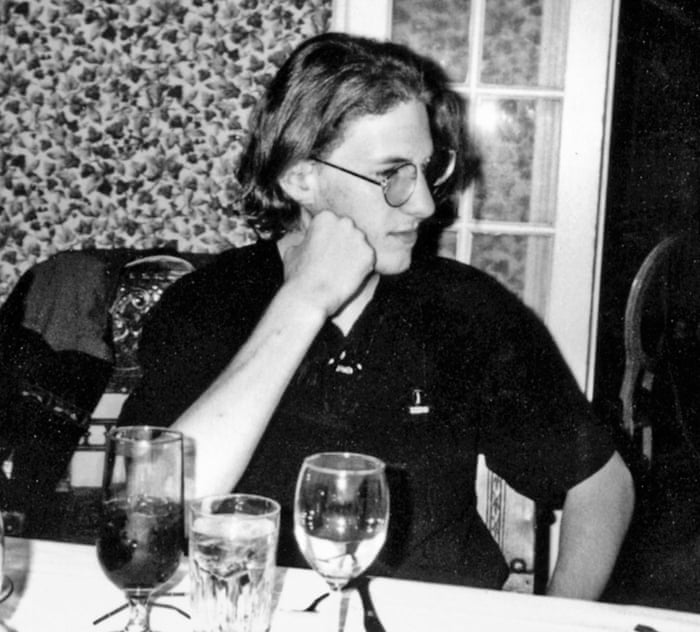
Dylan Klebold – one of the two deeply troubled Columbine High School shooters who took the lives of 12 innocent people on the fateful Tuesday 20th April 1999 – people who, to them, symbolised every aspect of humanity which they loathed. Passiveness, ignorance, stupidity, cruelty. The “zombie-(in Dylan’s words)-like” existence of people which the pair believed they had a superior awareness of. They were “god-like”. Perhaps fueled by incidents of alienation: like when ketchup-soaked tampons were pelted at Dylan in the cafeteria. And while a disdain for the unattractive aspects of humanity -manifested in bullying and most of all concentrated in the schoolyard – is understandable, how a boy can go from contempt, to severe depression, to mass murder, is not. How a person can manifest exactly what they supposedly “hate” – the cruelty of humanity – is unexplainable.
I’ve found myself deeply fascinated by the events of the Columbine shooting over the past few days and in an attempt to understand the motive behind it, I’ve come to realise that Dylan Klebold was a deeply troubled young man who was friends with the wrong psychopath. A boy who was, first and foremost, a teenager, filled with loneliness and a longing for love, acceptance and happiness. A teenager who experiened many of the same emotions amplified by depression that are felt and hidden by millions – thousands of whom become victims of suicide, addiction and severe mental illness every year. And that is something that has not changed since 1999. Fortunately, awareness has, but not without the endurance of a pervasive and dangerous stigma of weakness.
I don’t know how many others reading this find themselves with a similar innate fascination for true crime or a deep curiosity into the seemingly distant, removed inner workings of a killer’s mind. But I’ve always found myself intrigued, drawn by the stories of the sociopaths and psychopaths of the headlines who seem so unsuspectingly functional and yet are chillingly broken and inhuman. But more so intriguing, horrifying, even, are those among us who begin like any other – “normal” human – but end up leaving behind a legacy similar to those of the psychopathic, the sociopathic. The most terrifying and baffling are the criminals who wouldn’t induce harrowing chills from their pictures, but rather, would strike us as “normal”.


In no way can the actions of Dylan Klebold and Eric Harris ever be justified, excused, nor are either void of blame. They made a horrific, meticulously planned choice to inflict death and pain onto not just their victims, but a nation and a globe. But my point: not every action of violence stems primarily from a raw desire for it, if at all. It can come from internal pain, suffering, loneliness. An awareness of the cracks in our own humanity is a dangerous thing – and Dylan, reading his words and seeing his feelings and pain seep from the page – is a testament to that. Please don’t get me wrong. Dylan Klebold was a killer. In cold blood, he shot and murdered 5 of his class mates (Eric the rest), with the failed intention of killing many more. That is anything but blameless. But perhaps, without the influence of the latter in his vulnerable state, Dylan might have channeled his depression into less violent fantasies. Had he gotten help, perhaps he would be alive today.
Is it wrong to humanise people who do choose to be so inhumane? Who assault the privilege of living? Perhaps, but equally true is the fact that Dylan Klebold was not a psychopath. He was human, fully and completely. A boy who felt and agonised over teen crushes, bad grades, over his loneliness and sadness. A boy who wrote in his journal about love and was not consumed always by hate and violence, but by suicidal thoughts and depression. And with the number of school shootings and gun related deaths rising every year, it is imperative that we recognise this, that we start to care a little more about the wellbeing of our youth, and of the people around us. That we start to nurture and listen to our peers, our teenagers – who have become experts at concealing their depression – just a little better in hope of tackling the mental health epidemic of the modern age. Ignorance may be bliss, but such bliss may not be worth lost lives.
Scroll up. Read the journal entry one more time, pretending you don’t know who wrote it or where it came from. Do you see in those words the heart of a killer?
Read more of Dylan Klebold’s journal here.
Sue Klebold’s Ted Talk: https://www.ted.com/talks/sue_klebold_my_son_was_a_columbine_shooter_this_is_my_story?language=gu


Disclaimer: I’m not an expert. Just my opinion. Some food for thought! Please please leave your thoughts down below.
– goldenchild31
 the undergrowth.